|
|
|
|
|
|
| Vernham Dean and it's surrounding area. |
|
|
| Vernham Dean is set amongst the North Wessex Downs in the north west part of the county of Hampshire in southern England. The North Wessex Downs are classified as an Area of Outstanding Natural Beauty and are part of a range of chalk hills stretching in an arc across Southern England. |
|
 |
Wessex is the ancient kingdom ruled by King Alfred the Great in the period following the Roman occupation when the country was under attack from the Vikings. |
|
|
|
 |
|
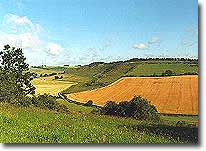
Vernham Dean is set within a steep valley. Right shows the view to the west of the village looking from Conholt Hill towards Haydown Hill which is 254m above sea level.
At the top of the hill is an ancient iron-age for with its earth ramparts just visible |
|
|
|
Click picture for a larger image |
|
| To the north of the village the hills rise again and then descends by a steep escarpment to the flat plains of the Kennet and Avon rivers in the county of Berkshire. To the south is the Test Valley, named after the river that is famous for its trout. |
|
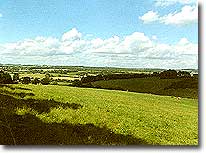 |
Left. A view further to the west of the village near to Upton. |
|
|
|
 |
|
| Click picture for a larger image |
|
|
|
Click picture for a larger image
|
|
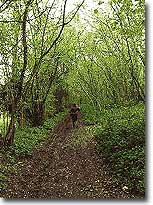
| Above right. One of the local walks showing a lane with hazel trees. These were traditionally grown as "coppice" to provide fencing material. The art of weaving the long branches into panelled fences has been revived in recent years, as too has the art of building both chalk, brick and flint walls and the laying of hedgerows. |
|
Vernham Dean. The name Vernham Dean is a corruption of Fernham meaning a hamlet (or village) set amongst the ferns which still grow in abundance at the road side. Dean means a wooded valley.
Vernham Dean can trace its origins back over 1,000 years but most of the older houses date from the 1600s onwards. One thatched cottage, called Dear's Leap, is reputed to have been a field hospital in the Civil War during that period. On the outskirts of the village is the Burydene is were it is thought the original village was situated and possibly abandoned during the Plague. The parish church was rebuilt in the 1800s but still has its original Norman doorway (1100s). There is also Vernham Manor dating from Jacobean times (1600s). |
|
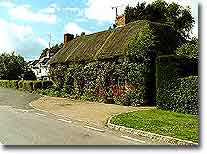 |
Left. An example of one of the thatched cottages built of brick and flint, the abundant buiding material of the area. The white house in the background was once one of the 3 village pubs |
|
|
Click pictures for a larger images
|
|
|
|
 |
|
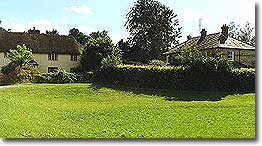
| Right. The former village pond, to the left in the picture is another thatched cottage but this time built with chalk walls which was then a cheaper form of construction. To it's right is another brick and flint cottage complete with slate roof. |
|
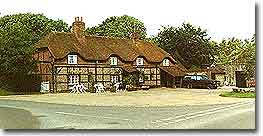 |
Left. The remaining village pub, The George, was once thatched and the shed to the right once kept the village bus. There was even at one time a plan to build a railway through the village.
|
|
|
|
Click picture for a larger image
|
|
|
|
Words and pictures: Managing Change.
|
|
|
|
|
|
|
|
|
|
|
|
|
|
|
|
|